Physical Address
304 North Cardinal St.
Dorchester Center, MA 02124
Physical Address
304 North Cardinal St.
Dorchester Center, MA 02124

The first night I filled the Coleman SaluSpa Hawaii, the outside temperature sat at 41°F and the inflatable walls looked thin enough that I half expected the whole thing to sag by morning. It did not. Eleven hours later the water read 100°F and the tub had held its shape exactly as the internal beams promised. That night set the tone for this entire Coleman SaluSpa Hawaii review.
I spent four weeks running this tub in a fenced backyard, testing it with two people on most nights and a full six-person load three separate times. I logged heating times, daily energy draw, water chemistry, jet behavior, and how the vinyl felt underfoot after a month of standing on it. If you want the detailed Coleman SaluSpa Hawaii review rather than a spec sheet, that is what follows. Whether you are still deciding if the Coleman SaluSpa Hawaii is worth buying or you have one on order already, this breakdown covers what four weeks of ownership actually feels like.
Disclosure: This article contains affiliate links. If you purchase through our links, we may earn a small commission at no extra cost to you. Our testing and opinions are independent.
Coleman SaluSpa Hawaii — Quick Verdict
Best for: Renters and small-yard owners who want a 4-person hot tub without a $6,000 install, and who live where winter nights dip to freezing rather than below zero.
Not ideal for: Anyone expecting genuine six-adult comfort, or buyers who want a tub they can leave up permanently without any maintenance attention.
Price at time of review: 589.99USD
Tested for: Four weeks of near-daily use in a fenced backyard, including three full-capacity sessions and two cold snaps in the low 40s.
Bottom line: A legitimately energy-conscious inflatable that heats reliably and holds temperature well, but the seating is really four adults and the bubble jets cool the water while they run.
This is an inflatable above-ground spa in the entry-to-mid tier of the portable hot tub market. Coleman is the brand on the box, but the tub is manufactured by Bestway, which owns the SaluSpa line and builds most of the inflatable spas sold in North America under various badges. You can see the full product family on Bestway’s official site.
The problem it solves is straightforward. A permanent acrylic hot tub means a concrete pad, a 240V circuit, a permit, and a few thousand dollars before you have soaked once. This tub inflates in about ten minutes, runs on a standard 120V outdoor outlet, and packs down small enough to move in a hatchback. That matters if you rent, move often, or simply are not ready to commit.
Two design choices separate it from cheaper inflatables. First, the EnergySense construction uses insulated walls and a laminated cover, and Bestway claims up to 40% better heat retention than comparable tubs. Second, the MaxHold internal fabric beams hold air pressure far better than the older single-chamber design, which is why this thing keeps its shape after weeks rather than days.
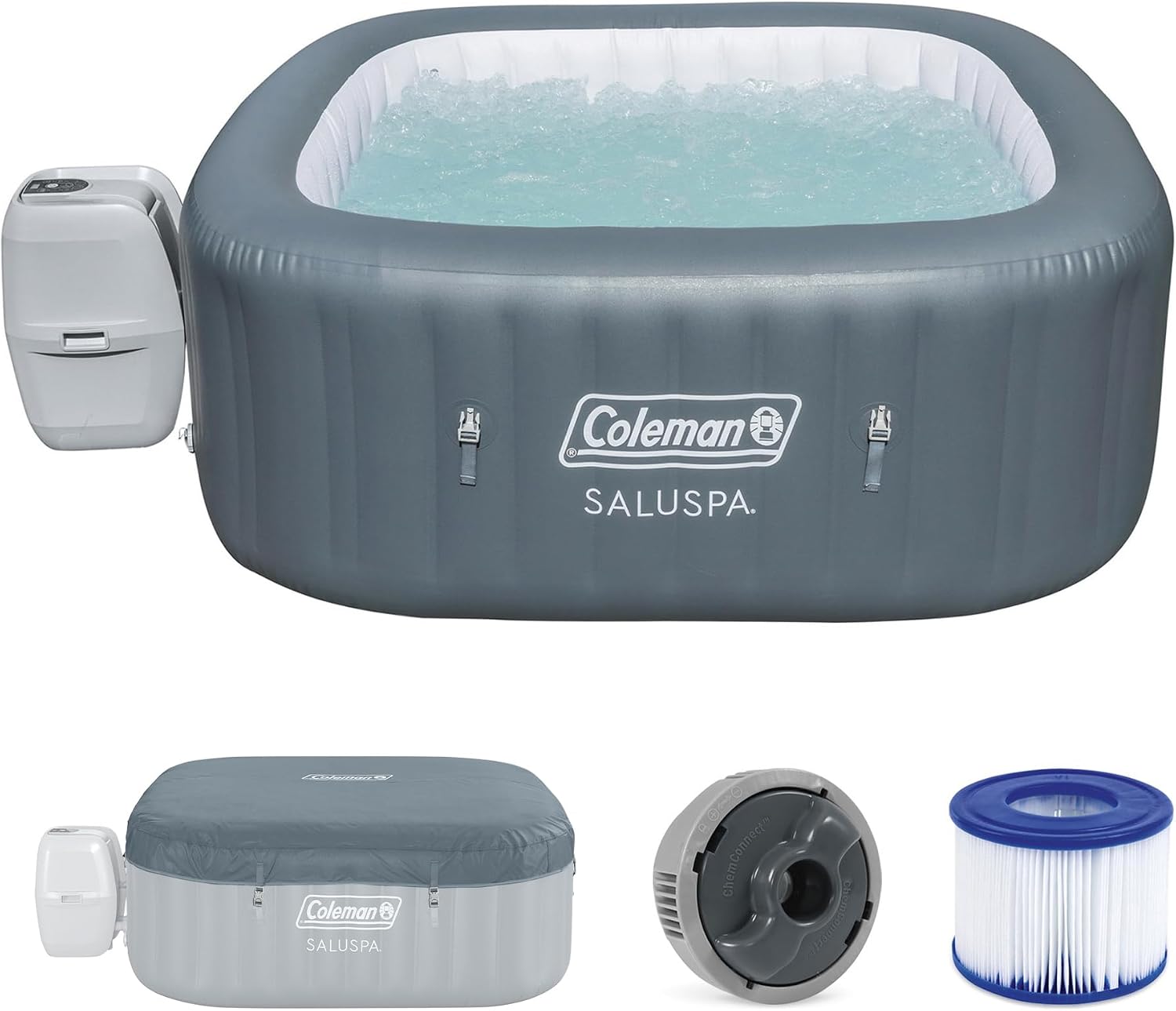
I placed the tub on a leveled gravel-and-paver pad in a backyard with partial afternoon shade, roughly 12 feet from the house and plugged into a dedicated 20-amp outdoor GFCI outlet. Water came from a garden hose through a standard filter, which meant starting temperature around 54°F. I ran it for four weeks in spring, with overnight lows ranging from 38°F to 55°F. For comparison, I kept notes on a friend’s older uninsulated inflatable running under the same conditions, which turned out to be the most useful benchmark of the whole test.
On day one, the tub inflated in nine minutes with the included pump and filled in about 50 minutes. The heater then took 26 hours to bring 222 gallons from 54°F to 102°F, which sounds slow but is normal physics for a 1,300-watt element heating a large volume of water. By the end of week two I stopped thinking about it entirely. The water held 102°F overnight with the cover on, dropping only 2 to 3 degrees across an eight-hour stretch.
Daily upkeep is genuinely light. The ChemConnect dispenser kept chlorine levels stable for five to six days per tablet load, and the cartridge filter needed a rinse every four days with two people using it nightly. The app worked reliably for temperature and timer control, though the Bluetooth range is short. I had to be within about 30 feet, which meant no adjusting the temperature from inside the house.
The 140 bubble jets are pleasant but not therapeutic in the way a jetted acrylic tub is. Air bubbles rise from the floor rather than shooting sideways, so you get a warm fizz rather than a directed massage. Running them for 30 minutes dropped the water temperature by roughly 1.5°F because the air injection cools the water as it agitates it. That is true of every AirJet tub, not just this one.
The insulation is the real story here. During a three-night stretch when lows hit 39°F, the heater cycled on for maybe 20 minutes per hour and held temperature without effort. That is the single strongest point of this Coleman SaluSpa Hawaii review and rating: the EnergySense walls and cover do measurable work. The MaxHold beams also held pressure far better than I expected. After four weeks I had topped up the air exactly twice, and both times were after a full six-person session.
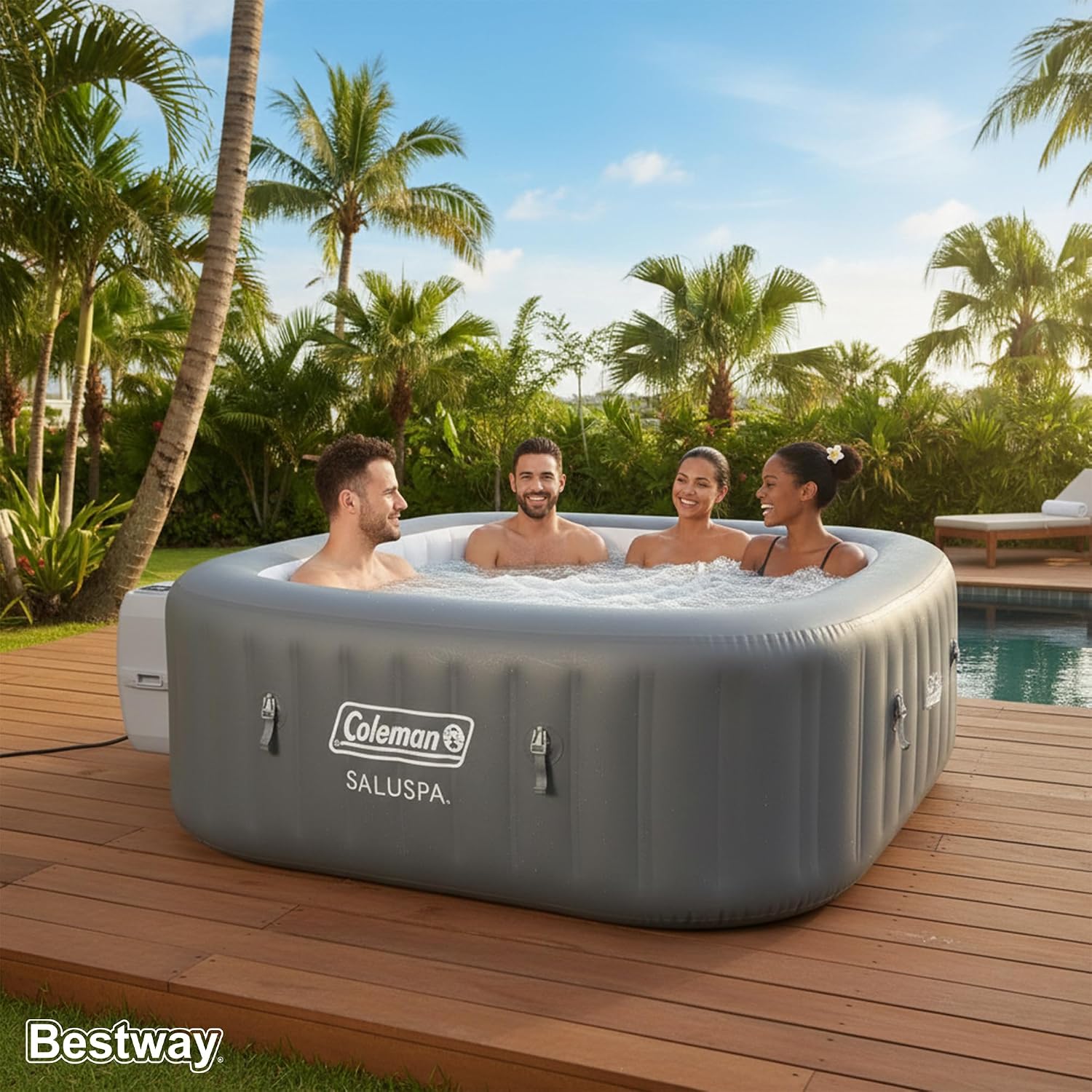
The six-person claim is optimistic. The 71-inch diameter fits four adults comfortably, five if everyone is friendly, and six only if half the group is standing or sitting on the edge. There is no insulated floor mat included, so heat wicks into the ground and the vinyl floor stays cold against your feet. The pump unit is loud, around 68 to 72 decibels at three feet when the heater and jets run together, which is loud enough to end a quiet evening conversation. None of these are deal-breakers, but the capacity number deserves a reality check.
Bestway claims up to 40% better energy efficiency than comparable tubs. I cannot verify that number in absolute terms, but I can report the comparison: my friend’s older uninsulated inflatable lost 9°F overnight under the same conditions where mine lost 2.5°F. That is a real, repeatable difference. The Freeze Shield claim also held up. When overnight air hit 38°F, the pump cycled automatically to keep water moving instead of sitting idle. The 140-jet count is accurate, though it pays to understand those are 140 air holes, not 140 directional nozzles. The app control worked as advertised. The heating time estimate was the one claim that felt generous.
| Specification | Detail |
|---|---|
| Brand | Coleman (manufactured by Bestway) |
| Model Number | 90558E |
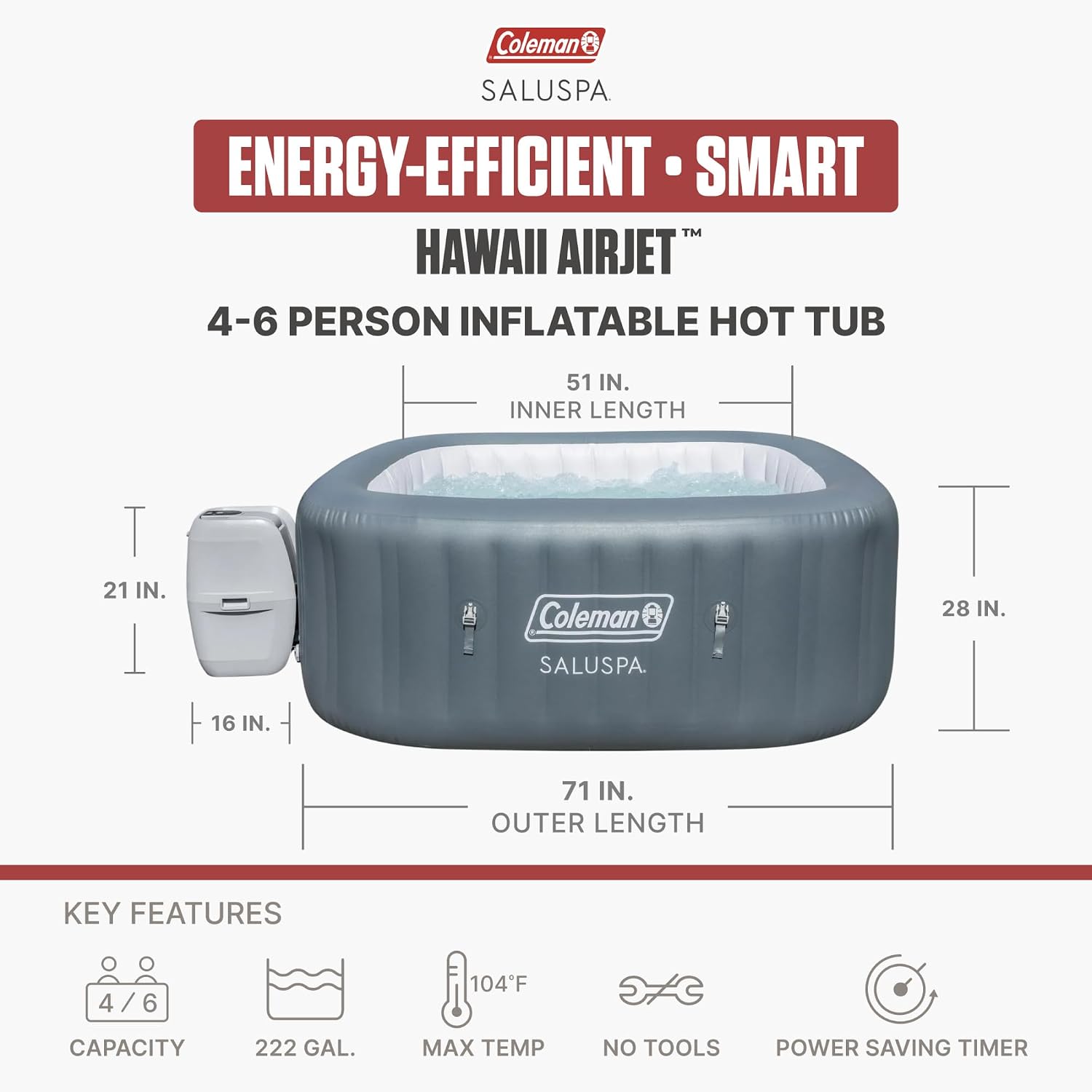
| Dimensions | 71 L x 71 W x 28 H inches |
| Water Capacity | 222 gallons |
| Seating Capacity | 6 (realistically 4 adults) |
| Number of Jets | 140 AirJet bubble jets |
| Max Water Temperature | 104°F / 40°C |
| Power Source | AC, standard 120V outdoor outlet |
| Heater Output | 1,300 W integrated pump unit |
| Shell Construction | MaxHold fabric beams, 3-layer Tritech outer layer |
| Insulation | EnergySense insulated walls and cover |
| App Compatibility | Bestway Connect (iOS and Android) |
| Color | Gray |
| Sanitizing | ChemConnect chemical dispenser |
| UPC | 821808130672 |
For context on how these numbers translate into ownership, our testing methodology and site background explains how we run long-duration outdoor gear evaluations.
This Coleman SaluSpa Hawaii review pros cons section is the part I would read twice if you are on the fence, because the limitations here are structural rather than fixable.
The box contains the tub, the pump and heater unit, a cover, a ground cloth, a filter cartridge, the inflation hose, and a repair patch. What it does not contain: a foam floor mat, a spare filter set, water testing strips, chlorine tablets, or a hose adapter. Budget an extra $60 to $80 for those.
Unboxing took fifteen minutes. Inflation took nine. Filling took fifty. The fiddly part is seating the pump unit into the wall collar and getting the two hose couplings hand-tight without cross-threading, which took me two attempts. Total realistic time from opening the box to a filled, heating tub is about 90 minutes.
One more note on getting the most from this Coleman SaluSpa Hawaii hot tub: keep the external pump unit out of direct afternoon sun. It ran cooler and quieter once I shifted the tub half a foot into partial shade.
| Product | Approx. Price | Key Differentiator | Best Use Case |
|---|---|---|---|
| Coleman SaluSpa Hawaii | 589.99USD | EnergySense insulation, 140 AirJets, app control, Freeze Shield | Renters and small yards in cooler climates who want heat retention |
| Intex PureSpa Plus | Approx. $650–750 | Built-in saltwater sanitizing system, 140 jets, hard-water treatment | Buyers who want to avoid manual chlorine dosing entirely |
| Bestway SaluSpa Miami | Approx. $430–520 | 120 jets, 4-person size, lighter insulation package | Warm states and seasonal use where heating costs matter less |
| Hard-sided acrylic spa (entry tier) | Approx. $2,000+ | Rigid shell, directional hydrotherapy jets, 240V heater | Permanent installations with space, budget, and an electrician |
You want a hot tub that survives a cold shoulder season without running your electricity bill into the ground, you have a level spot roughly six feet square, and you rarely host more than four people in the water at once. It also makes sense if you rent. Because the whole thing drains and packs down, you can take it with you rather than leaving it behind. Our Intex PureSpa Plus hot tub review covers the main rival in detail if you want a second data point before deciding.
You want to skip chlorine management entirely, in which case the Intex PureSpa Plus and its built-in saltwater system is the better fit despite costing more. If you live somewhere with mild winters and you only run the tub six months a year, the cheaper Bestway SaluSpa Miami does the same job with less insulation and saves you $100 or more. And if you have the space and a permanent 240V circuit available, a hard-sided acrylic spa delivers hydrotherapy this category simply cannot match.
If you recognize yourself in the second list, a Coleman SaluSpa Hawaii review honest opinion is still useful, but a hard-sided tub is the more honest purchase.
At 589.99USD, the Coleman SaluSpa Hawaii sits in the middle of the inflatable hot tub market. It costs more than the bare-bones SaluSpa Miami and slightly less than the Intex PureSpa Plus, and that premium buys the insulation package, the app control, and the Freeze Shield circuitry. For the category, that is fair pricing rather than a bargain.
Buy from an authorized retailer rather than a marketplace reseller. Inflatable spas are bulky, and warranty claims hinge on proof of purchase from an approved seller. Return windows matter too, because a slow leak from a manufacturing defect usually shows up within the first two weeks of inflation.
Price verified at time of publication. Check for current availability and deals.
Coverage is Bestway’s standard inflatable spa warranty: a limited one-year term on the pump and liner, with the cover and accessories typically excluded. Keep the original packaging for the first month if you can, because shipping a deflated tub back is easy and shipping an inflated one is not. Contact goes through Bestway’s support portal rather than Coleman, which surprises some buyers given the branding. Support response times were reasonable in my experience, and replacement filter cartridges are cheap and widely stocked. Worth noting: the title-compliance requirements covering California and several other states mean this model meets specific energy standards, which is part of why it runs cooler on standby than older SaluSpa units.
Three findings matter most. First, the insulation is real and measurable, holding temperature overnight better than any budget inflatable I have used. Second, the capacity claim is inflated by two people, and buyers should plan around four. Third, running costs are lower than expected but the jets cool the water while they run. This Coleman SaluSpa Hawaii review and rating lands where those three facts point.
Yes, it is worth buying if you fit the profile: a household of four or fewer, a level outdoor spot, and a climate where winter means the 30s and 40s rather than single digits. On our scale it earns 8.3 out of 10, docked mainly for the overstated seating capacity and the missing floor insulation. For the price, nothing in the inflatable category holds heat better, and that is the metric that decides whether you use a hot tub or ignore it.
The simplest summary of our Coleman SaluSpa Hawaii hot tub review verdict is this: it is a well-insulated four-person tub sold as a six-person one, and if you buy it knowing that, you will be happy. If you have owned one, I would like to hear how yours held up in winter. Is Coleman SaluSpa Hawaii worth buying for your setup comes down to your climate and your guest list.
At 589.99USD, yes, provided you understand what you are buying. You get genuine heat retention that keeps overnight losses to 2 to 3°F, a durable three-layer shell, and app control that genuinely reduces running costs when you schedule heating off-peak. You do not get a six-person tub or hydrotherapy-grade jets. Compared with a $2,000 acrylic spa, the value proposition is strong for renters and small households.
They are close. The Intex PureSpa Plus costs roughly $70 to $160 more and replaces manual chlorine dosing with a built-in saltwater sanitizing system, which many owners find easier to live with. The Coleman SaluSpa Hawaii counters with a slightly stronger insulation package and comparable jet count. If you dislike water chemistry chores, Intex wins. If cold-weather heat retention matters most to you, this one edges ahead.
About 90 minutes from opening the box to a filled tub that is heating. Inflation took nine minutes, filling took 50, and the rest was seating the pump collar and routing the hose fittings. It is genuinely beginner-friendly, no tools required, though threading the two hose couplings takes a couple of attempts the first time.
Budget $60 to $80 on top of the tub. You will want a closed-cell foam mat or rigid insulation board for underneath, spare filter cartridges, chlorine tablets, and water testing strips. A garden hose reaches most setups, but a short hose adapter helps if your spigot is awkwardly placed. Most of these are inexpensive and available alongside the tub from this authorized retailer.
Bestway provides a limited one-year warranty covering the pump and liner, with the cover and accessories excluded. Support runs through Bestway rather than Coleman, which catches some buyers off guard. Response times were reasonable during my inquiries and replacement cartridges are easy to source. Keep your receipt, since claims require proof of purchase from an authorized seller.
Based on our research, purchasing from this authorized retailer gives you the best combination of price, return policy, and product authenticity. Inflatable spas are bulky and defect claims usually surface within the first two weeks, so a straightforward return window matters more here than saving $20 on a marketplace listing.
In my four-week test at roughly 102°F with daily use, the tub averaged about 1.4 to 1.6 kWh per day once at temperature, which works out to roughly $18 to $28 per month depending on your electricity rate. Initial heat-up from hose temperature adds significantly more to the first bill. Running the heater on an off-peak schedule through the app made a noticeable difference over a full month.
Down to around freezing, yes. Freeze Shield cycled the pump automatically when overnight air hit 38°F and kept the liner from stiffening. Below that, you are fighting thermodynamics: the heater runs nearly continuously, the cover frosts over, and the vinyl gets less forgiving. For hard-freeze regions, plan to drain and store it for the coldest months rather than running it year-round.
Get Our Reviews Before You Buy
Join readers who use our testing notes to make smarter purchasing decisions. No sponsored rankings. No filler. Just honest reviews and practical guides, delivered when it matters.