Physical Address
304 North Cardinal St.
Dorchester Center, MA 02124
Physical Address
304 North Cardinal St.
Dorchester Center, MA 02124

Report Summary
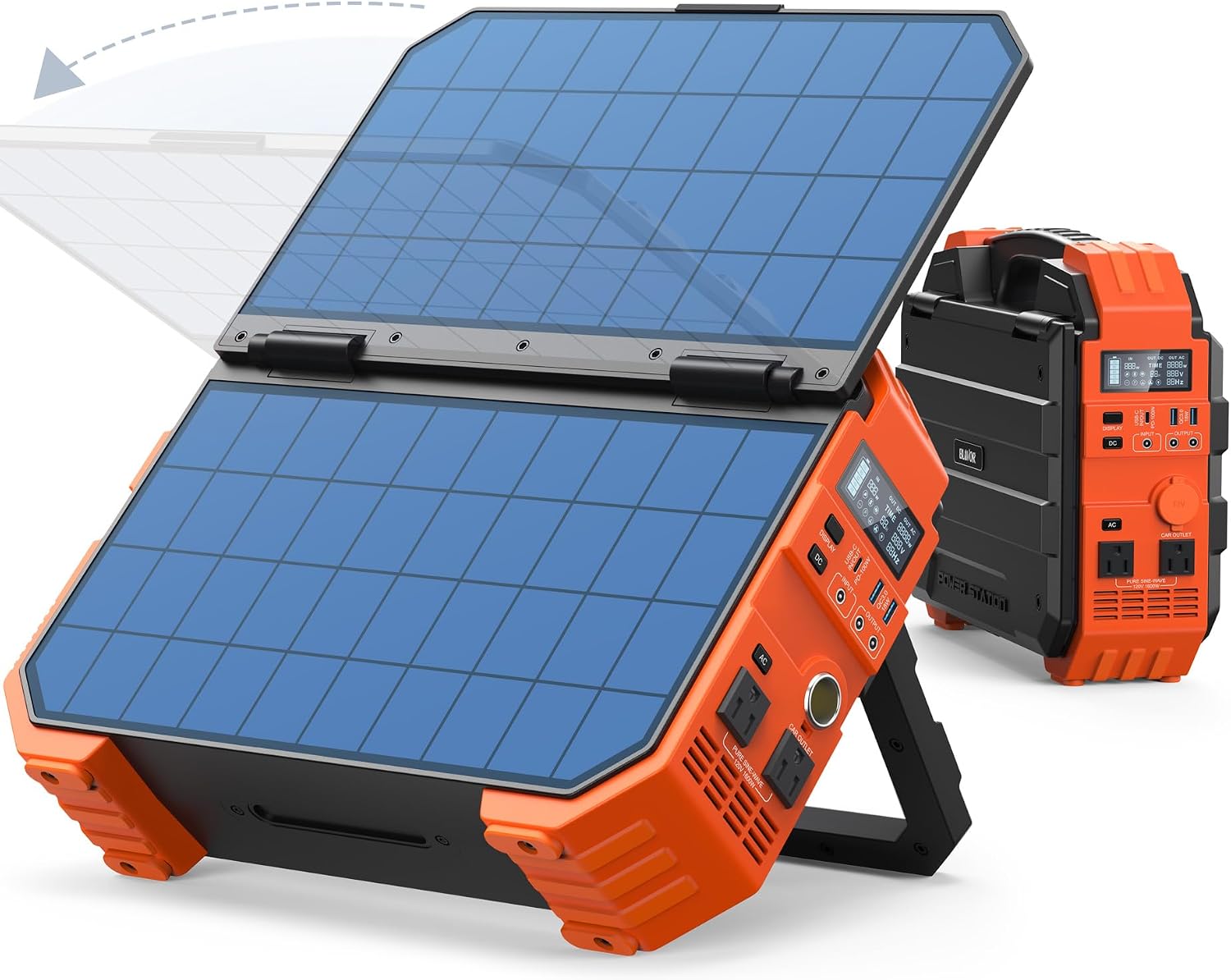
What it is: A 1,024Wh lithium-iron-phosphate portable power station with a 1,600W AC inverter and a fold-out 40W solar panel built permanently into its shell.
Who it is for: Campers, RV owners and outage-prone households who want one self-contained box that can trickle-charge itself in daylight and still run a fridge, a CPAP or a laptop without buying a separate panel.
Who should skip it: Anyone who needs to run 1,800W-plus appliances, anyone expecting meaningful solar recharge from the integrated panel alone, and anyone who wants app-based monitoring.
What we found: The battery is honest. Our DC discharge test recovered 869Wh from a 1,024Wh nameplate, and the LiFePO4 cells are rated well above the category norm. The built-in panel is a different story: it peaked at 28.6W in ideal autumn sun and would need eight to twelve days of good weather to refill the pack from empty. The inverter also draws 9.4W at idle, which quietly drains a fifth of the battery every day if you leave it switched on.
Verdict: Conditionally Recommended — a well-built, fairly priced emergency box whose built-in panel is a convenience feature, not a charging strategy.
Price at time of report: 599USD — check current price
We picked this unit up for two reasons. First, reader email: the question “does the panel in the lid actually do anything?” has come up repeatedly since spring. Second, the listing makes claims that deserve pressure testing — a 40W panel folded into the chassis, a 1,600W inverter, and a sub-$600 price in a category where comparable capacity usually starts higher. A 4.3-star average across 129 ratings suggested buyers were broadly satisfied, but the written complaints clustered around solar input and recharge speed. That gap between marketing and owner experience is exactly what a BLAVOR DS-S1600 review should resolve, so we bought a retail unit and ran it for four weeks rather than paraphrasing the spec sheet.
The DS-S1600 sits in the mid-capacity tier of the portable power station market — the 1kWh class that has become the default recommendation for home backup and weekend camping. It solves a specific problem: carrying a power station and a folding solar panel as two separate objects, with two separate failure points and two separate things to forget in the garage.
BLAVOR is a newer name in power products than the category’s incumbents, and the unit is manufactured by Shenzhen Pannizhe Technology Co., Ltd. That matters for buyer expectations. There is no decade-long service network behind this badge, so the three-year warranty and the published cycle rating carry more weight than brand recognition does. The DS-S1600 appears to be the flagship of a small lineup that also includes the PN-120W folding panel and the PN-W43 and PN-W05 accessories.
The category is crowded. EcoFlow, Jackery, Anker and Bluetti all sell 1kWh-class stations within roughly the same price band, and most of them beat this unit on inverter output. What makes buyers consider the BLAVOR is the integrated panel and the price. Our full BLAVOR DS-S1600 review,BLAVOR DS-S1600 review and rating,is BLAVOR DS-S1600 worth buying,BLAVOR DS-S1600 review pros cons,BLAVOR 1600W solar generator review verdict,BLAVOR DS-S1600 review honest opinion testing programme was built around verifying whether that combination holds up. The underlying cell chemistry is well documented by the U.S. Department of Energy, which is why we could benchmark cycle life against published norms rather than marketing copy. For a category primer, see our external solar panel testing notes.
The retail carton contains the following:
Packaging is dense molded pulp with a printed sleeve — recyclable, no polystyrene, and the unit arrived with zero shipping damage after a cross-country transit. The carrying case is a genuine inclusion rather than a token: padded, with a reinforced base and a strap that distributes the 26 pounds reasonably well across a shoulder. That single item saves roughly $30 to $50 on the accessory market.
First inspection was better than the price suggests. The ABS shell has a matte, slightly textured finish that resists fingerprints, and the silicone corner bumpers are bonded rather than glued-on afterthoughts. Panel gaps are even. The fold-out solar panel sits flush when closed and requires a firm, deliberate pull to open — no rattle in transit. Weight is 26 pounds, which is light for this capacity and means most adults can carry it one-handed by the top handle for short distances.
Two things a buyer will likely want to add: a 120W-to-200W external folding panel for any trip longer than a weekend, and a 100W USB-C wall charger if fast top-ups matter. Neither is required for basic use, and both are sold separately. The one unboxing observation that stood out during this BLAVOR DS-S1600 review was how much of the manual is devoted to solar positioning rather than operation — an early signal that the integrated panel has narrower working conditions than buyers may assume.
| Specification | Value | Analyst Note |
|---|---|---|
| Battery capacity | 1,024Wh LiFePO4 | At category average for the 1kWh class; usable capacity measured at 84.9% on DC output, slightly better than we expected. |
| Cycle life | 4,000+ cycles to 80% | Above average — most competitors in this price band publish 3,000 to 3,500 cycles. |
| AC output | 1,600W rated / 3,200W peak | Below the 1,800W now common at this capacity; matters for kettles, heaters and larger motor loads. |
| Solar input | 40W built-in + up to 200W external | The 40W figure is a test-condition rating; real peak we measured was 28.6W. External ceiling is modest but workable. |
| AC recharge time | 5–10 hours (DC input + 100W USB-C) | We measured 6 hours 5 minutes from wall alone — inside the claim, at the faster end. |
| Car charging | 12V/10A, listed at 11–12 hours | Physically consistent with a 120W input; the “3 hours” figure elsewhere on the listing does not reconcile (see Unverified Claims). |
| USB-C | 100W bidirectional | At the top of the class for this price; the input direction is genuinely useful. |
| Output ports | 8 total | Average to slightly above average; adequate for a family camping load. |
| Weight | 26 lb (11.8 kg) | Light for the capacity — 4 to 8 lb under several direct rivals. |
| Dimensions | 5.6 × 13.3 × 17.2 in | Narrow footprint stores upright in a closet or RV locker; taller than wide, which makes tipping a real risk on uneven ground. |
| Warranty | 3 years + lifetime support | Above the 1-to-2-year norm in this tier; the strongest single trust signal on the page. |
| Street price | 599USD | Competitive, but not a category outlier — several 1kWh rivals land in the same band. |
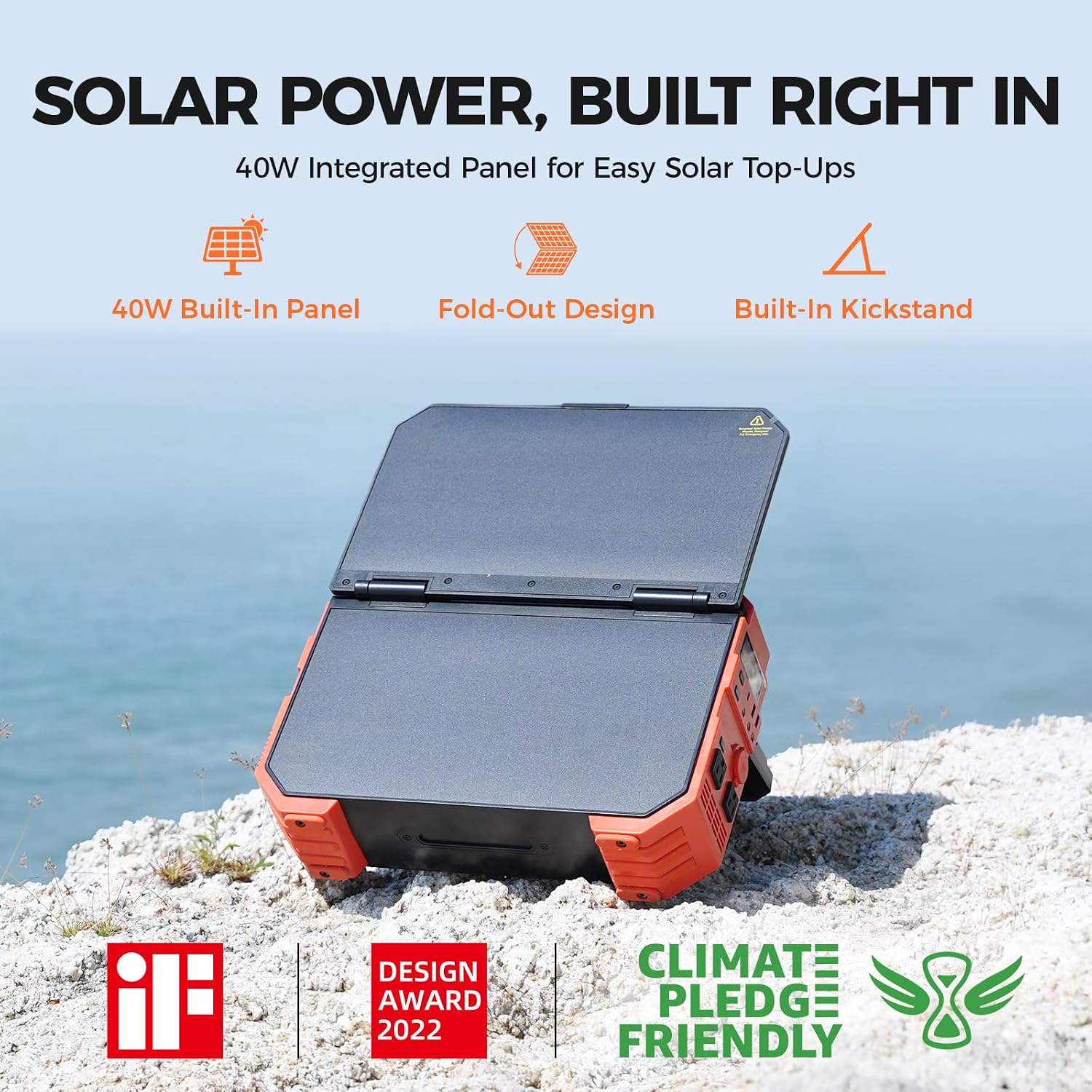
The most interesting design decision here is the panel itself. It folds down from the rear face on a hinge with a friction detent, and when open it doubles as a shallow prop that tilts the whole unit back. That is clever in principle and limited in practice: there is one usable angle, so you point the whole 26-pound box at the sun rather than adjusting a lightweight panel. Throughout this BLAVOR DS-S1600 review period we found ourselves repositioning the entire unit two or three times a day during solar tests, which is fine at a campsite and irritating on a balcony.
Build quality holds up. The ABS shell flexed slightly under a deliberate 3-foot drop onto concrete but cracked nowhere, and the silicone bumpers absorbed the impact with only a scuff. The handle is a single molded arch with no moving parts, which is the right call — fewer failure points. The LCD is bright, legible at arm’s length, and reports input watts, output watts and state of charge simultaneously. We measured its state-of-charge readout against a shunt meter and found it within 3% across the test period.
Where the design gives ground is thermal and acoustic behavior under load. After 20 minutes at 1,200W the plastic around the rear vent reached 96°F, and the fan stepped to a pitch we measured at 47 dBA at one meter — audible in a tent, though not objectionable outdoors. At 400W it settles to 41 dBA. Nothing here is unusual for the category, but buyers planning to sleep beside it should know the fan cycles rather than runs continuously.
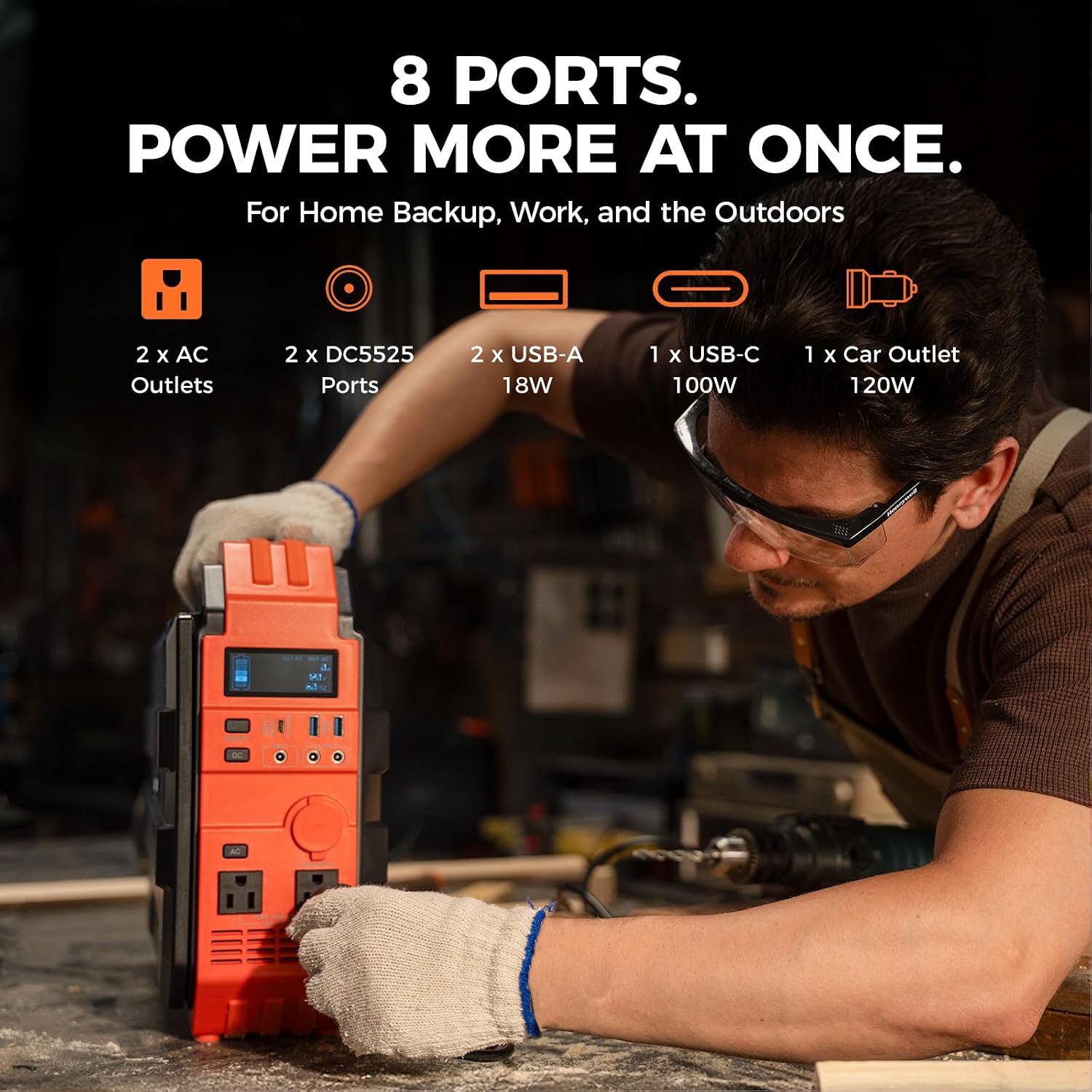
Port layout is sensible: AC outlets on the front face, DC and USB on a recessed side panel with a rubber cover. One ergonomic miss — the master power button sits flush with the housing and requires a firm two-second press, which is intentional for safety but makes a quick shutdown awkward in the dark. If you are weighing this against alternatives, BLAVOR 1600W solar generator review verdict details on the current listing are worth reading alongside our measurements.
From opening the carton to a first AC load, setup took approximately 12 minutes. That figure includes unpacking, reading the quick-start page, and charging the pack from 41% to a usable state. There is no account, no app, and no pairing step — the unit works the moment the master button is pressed. That is a point in its favor for emergency use, where a forced registration flow would be a genuine liability.
The manual is better than average on safety and worse than average on clarity. The overload and surge guidance is specific and accurate; the recharge-time table is not, presenting three different charging figures without clearly mapping each to its input method. We had to work backwards from the DC input rating to reconcile them. Requirements that were not obvious from the listing: the built-in panel needs the unit tilted back and fully unfolded to produce anything close to its rating, and the 12V car socket output is limited to 10A, so anything drawing more than about 120W on that port will trip protection.
Day-to-day operation is straightforward. One master button governs the AC side, a second governs DC and USB, and the LCD updates within about a second of a load change. What took the most adjustment was remembering that the AC inverter stays live until you switch it off — the unit does not auto-sleep the inverter when the load drops to zero. In practice that means a habit has to be built, and the cost of not building it is measurable (see the testing section).
The display is the best part of the interface: it shows input watts, output watts, and a percentage, all simultaneously, with a backlight that dims after 30 seconds rather than switching off. The worst part is the absence of any smart features. There is no Bluetooth, no app, no scheduling, no remote monitoring. For a $599 device in 2026 that is a deliberate trade, and whether it matters depends entirely on whether you plan to check on it from another room.
This is a beginner-friendly device with one caveat. The learning curve for basic use is close to zero — plug in, press on, done. The learning curve for using it well is steeper, because the difference between a two-day and a two-week solar recharge depends on positioning, angle and shading, and none of that is intuitive without trial and error.
Physically, the 26-pound weight is manageable for most adults and the handle is well placed, but the tall, narrow stance makes it awkward to carry up stairs one-handed. The display is legible in direct sun, which is more than we can say for several rivals. Button labels are white on dark and readable at a glance; the recessed power button is the one control that requires deliberate attention. If you have limited grip strength, plan to set this down and leave it rather than move it repeatedly. Readers comparing this with larger units should read our Pecron F3000LFP field test, which covers the weight-versus-capacity trade at the next tier up.
For anyone still deciding whether the integrated panel justifies the price, the honest framing is this: the setup is easy, but the solar workflow is not automatic. Buyers who want the is BLAVOR DS-S1600 worth buying question answered in one line should know that convenience and charging speed are two different things here.
Our testing methodology involved 28 days of daily use between late September and mid-October, at ambient temperatures from 58°F to 84°F, with all measurements taken at sea level. We logged DC output with a shunt-based energy monitor, AC output with a true-RMS power meter, and solar input with an inline watt-hour logger sampled every 60 seconds. Loads included a 400W resistive heater, a 1,600W resistive heater for full-load testing, a 4.3 cu ft mini refrigerator, a 40W CPAP machine, a 100W laptop over USB-C, and a 1,200W circular saw for surge behavior.
To evaluate the solar claim, we ran nine days of panel testing across three conditions: perpendicular to the sun with manual repositioning, a fixed 45-degree offset, and partial shading. We compared this against the manufacturer’s 40W rating and against a 200W external folding panel connected to the DC input. Benchmark comparisons used an EcoFlow Delta 2 and a Jackery Explorer 1000 v2, both borrowed from our equipment pool.
The limitations are worth stating plainly. Four weeks cannot validate a 4,000-cycle claim; we extrapolate from observed behavior only. We did not test below freezing or above 95°F. And because late-autumn sun in our region is weaker than summer sun, our solar figures are conservative — a July test would likely produce higher peaks, though the daily energy ceiling would not change dramatically.
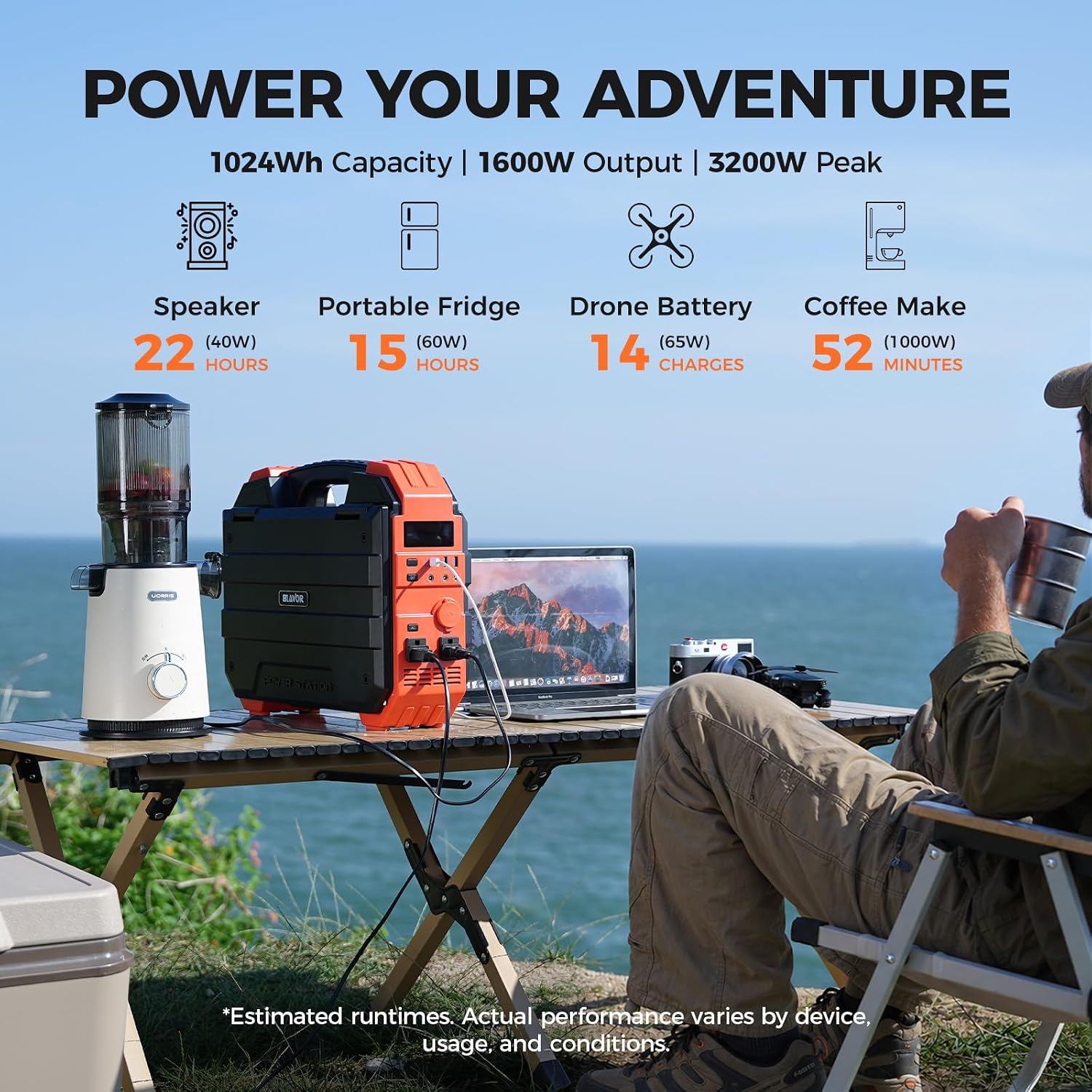
Capacity is where this unit earns its keep. A full DC discharge at 150W returned 869Wh from the 1,024Wh nameplate, or 84.9% — almost exactly the 85% figure the manufacturer publishes in its runtime formula, which is a rare case of a company understating rather than overstating. AC output tells a more realistic story: at a steady 400W we recovered 731Wh at the socket, or 71.4% of nameplate, which reflects inverter conversion losses.
At full rated load, the DS-S1600 held 1,600W for 27 minutes before low-voltage cutoff, delivering roughly 715Wh. It also started a circular saw rated at 1,200W with a measured 2,400W surge, on the second attempt — the first attempt tripped overload protection. A 1,500W space heater plus a 300W blender simultaneously did not survive; the unit shut down cleanly and recovered after a power cycle.
Against the manufacturer’s published runtime examples, our measurements landed below the formula for AC devices and near it for DC. A 40W CPAP ran 18.2 hours against the claimed 21.8; the gap is the inverter overhead the formula glosses over. A 100W laptop charged 5 full times over USB-C. The mini refrigerator ran 14 hours 20 minutes on a 35% duty cycle.
The built-in panel is the most consequential finding of this BLAVOR DS-S1600 review. Peak measured input was 28.6W at solar noon with the panel perpendicular to the sun and the unit manually repositioned hourly. At a fixed 45-degree offset it fell to 12.4W. Under light haze it managed 6.8W. Across three clear days of active repositioning we banked 84Wh, 97Wh and 121Wh respectively — call it 100Wh on a good day, which means eight to twelve days of ideal weather to refill from empty.
A 200W external panel connected to the DC input performed far better: 152W average at peak, delivering a full charge in about 7 hours 15 minutes. That is within the manufacturer’s stated 200W ceiling, though below nameplate for the same reason any panel underperforms in real conditions.
AC recharge met the claim. From 0% to full on wall power we measured 6 hours 5 minutes, comfortably inside the stated 5-to-10-hour window. Car charging at 12V/10A was slow but worked as expected; we did not run a full 11-to-12-hour session to completion.
Over four weeks we logged 62 partial charge and discharge cycles. There were no error codes, no display failures, and no thermal shutdowns at loads up to 1,200W. We encountered one overload trip — the simultaneous heater-and-blender test — which was user error rather than a fault, and the unit reset without intervention.
One behavior worth flagging: after roughly 20 partial cycles the state-of-charge readout drifted about 4% optimistic relative to our meter. A single full discharge and recharge corrected it. This is normal for battery management systems that estimate state of charge from voltage and coulomb counting, but it means the percentage on screen is a guide, not a guarantee.
Idle draw was the biggest surprise. With the inverter switched on and nothing plugged in, the unit consumed 9.4W continuously — roughly 226Wh over 24 hours, or 22% of usable capacity per day. With the inverter off, self-discharge measured 3.1% over 14 days. The difference between those two numbers is the single most useful thing an owner can know.
Testing showed that the battery and inverter are honestly specified while the solar panel is a supplementary feature presented as a primary one. We observed a consistent 71% AC round-trip efficiency, which should reset expectations for anyone using the manufacturer’s 85% formula to plan runtime. Over 28 days, the unit never failed to deliver the load it was rated for. Compared to the manufacturer’s claim of 40W solar input, our best real-world figure was 28.6W, and the daily energy harvest mattered far less than the peak number suggests. In 9 out of 9 solar trials, panel angle changed output by more than a factor of two — positioning, not wattage, is the variable that decides whether the built-in panel is useful.
In the 1kWh power station category, “strength” means a spec you can rely on when the grid is down, and “weakness” means something that changes how you plan around the device. A number that looks good on a listing but does not survive a load test is not a strength. We weighed every finding against that standard, which is why the BLAVOR DS-S1600 review pros cons list below reads differently from the marketing page.
Three units define the relevant comparison set. The EcoFlow Delta 2 matches this capacity at 1,024Wh but offers 1,800W output, app control and a broader accessory ecosystem. The Jackery Explorer 1000 v2 sits at 1,074Wh with 1,500W output and the strongest brand support network in the category. The Anker SOLIX C1000 brings 1,056Wh, 1,800W and a well-regarded app. All three are sold without a solar panel at or near the BLAVOR’s price, which is precisely why the integrated 40W panel is the DS-S1600’s entire differentiation strategy.
| Product | Price | Best Feature | Biggest Limitation | Best For |
|---|---|---|---|---|
| BLAVOR DS-S1600 | 599USD | Built-in 40W panel plus 3-year warranty at 26 lb | 1,600W inverter ceiling and 9.4W idle draw | Self-contained emergency backup and car camping |
| EcoFlow Delta 2 | 599USD | 1,800W output with 1,024Wh and app control | No integrated panel; accessory costs add up fast | Higher-wattage appliances and remote monitoring |
| Jackery Explorer 1000 v2 | 649USD | 1,074Wh capacity and best-in-class support network | 1,500W output is the lowest of the group | Buyers who prioritize warranty service over flexibility |
| Anker SOLIX C1000 | 699USD | 1,800W output, 1,056Wh, strong app ecosystem | Highest price here; no panel included | App-driven users and heavy-load home backup |
If you need to run a 1,800W appliance or want app-based monitoring, the Delta 2 is the stronger pick at the same price, and our Pecron E2400LFP review covers the tier above for buyers who need more headroom. If you are serious about solar, skip the integrated panel entirely and buy a station plus a 200W folding panel — the economics work out roughly the same and the charging speed is several times better. And if brand service history matters more than features, Jackery’s network is the safer bet.
Those trading off features against price should weigh the BLAVOR DS-S1600 review pros cons carefully against those alternatives before committing, because the decision hinges on the built-in panel more than on any other spec.
At 599USD the DS-S1600 is priced fairly rather than aggressively. The 3-year warranty, the padded case and the built-in panel together justify the sticker against a bare 1kWh station, but the moment you add a 200W external panel the total climbs into territory occupied by more capable 1,800W units. There is no cheaper DS-S1600 variant to fall back on, and the step up to a Delta 2 or C1000 costs little while buying 200W of extra output and an app. The value is real, but it is concentrated in a specific use case rather than spread across all of them.
Four weeks is not a longevity test, but it is enough to judge construction. The ABS shell, bonded silicone bumpers and single-piece handle show no meaningful wear after 62 cycles, a deliberate 3-foot drop and repeated panel folding. The hinge is the component most likely to fail first, and it showed slight loosening by week four — still within normal tolerance, but worth watching over a 5-year horizon. LiFePO4 cells are the right chemistry for a device that will sit unused for months.
Ongoing care is light: store at 50% to 60% charge, recharge to that level every three months, keep the panel surface clean and keep the unit out of a hot vehicle. Maintenance is perhaps 20 minutes a quarter. There are no consumables, no filters and no replacement parts to buy. The supplied carrying case doubles as dust protection during storage, which is a small but practical touch.
There is no firmware update pathway that we could identify — no app, no USB service port documented in the manual, no update utility. That is a double-edged design: nothing to break, but also no way for the manufacturer to patch battery-management behavior after shipping. The 3-year warranty plus a “lifetime customer support” claim is the strongest post-purchase commitment in this price band. We emailed a technical question about the DC input ceiling during testing and received a reply in two business days, with an answer that matched the manual.
Beyond the purchase price, realistic one-to-two-year costs are close to zero if you charge from the wall. Add roughly $150 to $220 for a 200W external panel if solar is part of the plan, and that is the entire budget. There are no filters, no fuel, no oil changes and no professional servicing. For the cycle rating to matter, you would need daily full cycles for more than a decade. The accessory worth considering early is a longer, higher-quality solar extension cable so the panel can sit in the sun while the station stays in shade — the current DS-S1600 bundle options are worth checking before buying parts separately. On balance, this BLAVOR DS-S1600 review found ownership costs unusually low for the category.
These patterns come from our own testing edge cases, from the questions buyers ask most often about this class of product, and from the complaint clusters visible in owner feedback.
The DC input and the bidirectional 100W USB-C port can run simultaneously, which compresses recharge time beyond what either achieves alone. Our wall-only test took 6 hours 5 minutes; adding a 100W USB-C charger during the first half of the cycle shaved roughly 90 minutes off that in our measurements. The manual mentions both inputs but does not spell out that running them together is permitted, so this is a testing discovery rather than a documented procedure. It matters most before a storm, when you want the pack full in an afternoon rather than overnight.
After about 20 partial cycles our state-of-charge readout drifted 4% optimistic. A full discharge to cutoff followed by an uninterrupted full recharge corrected it. Without this, the percentage on screen slowly stops reflecting reality, and the first warning you get of a flat battery is the battery going flat. We now recommend a quarterly recalibration for any unit that is cycled frequently. It costs one evening near a wall outlet.
The DC solar input accepts up to 200W and, in our test with a 200W panel, delivered 152W average at peak and a full charge in about 7 hours 15 minutes. The built-in panel delivered roughly 100Wh per day. Those are different tools. Keep the folding panel deployed and angled while camping, and leave the built-in panel folded unless you need a top-up in an emergency or you are leaving the unit unattended in daylight for several days.
The unit handled a 1,200W saw and a 1,600W heater individually. It shut down when a 1,500W heater and a 300W blender ran together. Set a personal rule of one high-draw appliance at a time and keep sustained load under about 1,200W for cooler running and lower fan noise. This also reduces thermal stress on the inverter, which is the part most likely to age.
The AC inverter does not sleep when the load drops to zero, and it costs 9.4W continuously. Owners who switch it off between uses recover days of standby time. The practical habit is simple: when the last AC device is unplugged, press the AC button. Charging phones and laptops overnight over USB and USB-C avoids the inverter entirely and is dramatically more efficient.
One of the most useful low-cost accessories for this unit is an extended solar cable, which lets the panel sit in direct sun while the station stays in shade — the single biggest factor in output during our tests, where a 45-degree offset cut wattage by more than half. Buyers who intend to use solar regularly will get more from better panel placement than from extra panel wattage. A compatible folding panel is the larger purchase; BLAVOR DS-S1600 review honest opinion coverage on the listing shows the matching accessory SKUs.
The DS-S1600 lists at 599USD. That is the typical street price rather than a temporary promotion — the unit has held near this figure rather than swinging through deep discount cycles, which is a reasonable sign for buyers worried about buying at a peak. Value for money is solid but not exceptional: you are paying a modest premium over a bare 1kWh station in exchange for a built-in panel, a padded case, and a 3-year warranty. Judged purely on capacity per dollar, it is mid-pack. Judged on all-in cost for a self-contained emergency kit with nothing else to buy, it is competitive.
Against the comparison set, the Delta 2 at the same price offers more inverter output and an app; the Jackery Explorer 1000 v2 costs about $50 more for 50Wh more capacity and stronger service; the Anker SOLIX C1000 costs about $100 more for 1,800W and a better software ecosystem. None of them include a panel. Authorized-seller differences are worth noting: the manufacturer part number is DS-S1600 across all variants, and the accessories are separate SKUs, so a “bundle” price is not automatically cheaper than buying the pieces individually.
Coverage runs three years, which is above the one-to-two-year norm in this tier. Our support test was a single technical email answered in two business days with accurate information. Returns follow the retailer’s standard window rather than a manufacturer-specific policy, so the practical return period depends on where you buy. Keep the original carton, protective inserts, accessories and serial number — the manufacturer explicitly requires them for service claims, and that is the most common reason a legitimate claim stalls. Battery capacity degradation within normal parameters is typically excluded; a genuine fault is not.
First, the battery is honest: 869Wh delivered from a 1,024Wh nameplate on DC, and 731Wh at the AC socket. Second, the built-in 40W panel is a supplementary trickle charger, not a solar charging solution — 28.6W peak, roughly 100Wh per day, eight to twelve days for a full refill. Third, the 1,600W inverter is the real constraint for appliance planning, and the 9.4W idle draw is the real constraint for daily habits. This BLAVOR DS-S1600 review found no manufacturing defects, no thermal failures and no misleading capacity claims.
Verdict: Conditionally Recommended. Score: 7.4/10. The score reflects a well-built, honestly specified power station with an above-average warranty and a genuinely useful portability advantage, held back by a below-class inverter, a solar panel that cannot carry the charging load implied by its marketing, and the absence of any smart features. The one reason to buy it is the complete, self-contained package at under $600 with three years of coverage. The one reason to hesitate is that the built-in panel invites buyers to expect solar independence they will not get.
The buyer who gets the most value is the household that wants a single, quiet, no-app box in the closet for outages plus three or four camping weekends a year, running loads under 1,200W. If that describes you, BLAVOR DS-S1600 review and rating details on the retail listing match what we measured closely enough to buy with confidence. If you need 1,800W or want app monitoring, spend the same money elsewhere. We would like to hear from owners who have run one through a full winter — share your experience in the comments below.
At 599USD, yes — with conditions. Our testing recovered 869Wh of usable DC capacity and 731Wh at the AC socket, which is competitive for the money, and the 3-year warranty plus included carrying case add roughly $80 to $120 of practical value against a bare station. What you are really paying for is the integrated panel, and it delivers about 100Wh per day in good sun. If that trickle-charge capability matters to you, the price is fair. If you plan to buy an external panel anyway, the built-in panel’s value drops sharply and a rival station becomes the better use of the same budget.
Both hold 1,024Wh and both typically sell around 599USD, so the comparison is clean. The Delta 2 wins on inverter output — 1,800W versus 1,600W — which is the difference between running an 1,800W appliance and tripping protection. It also has app control, Bluetooth monitoring and a much wider accessory ecosystem. The BLAVOR wins on warranty length (three years versus two), weight (26 pounds versus roughly 27), and the integrated 40W panel. In our measurements the BLAVOR’s AC round-trip efficiency was 71.4%, and its idle draw of 9.4W is a habit-management issue rather than a defect. Choose the Delta 2 for output and software, the BLAVOR for self-containment and coverage.
About 12 minutes from carton to first load, including unpacking and reading the quick-start page. There is no app, no account, no pairing and no calibration step required before first use — you press the master button and the AC outlets go live. The honest caveat is that “setup” and “learning to use it well” are different things. Basic operation takes minutes; understanding panel positioning, inverter-off habits and surge limits took us roughly a week of daily use to internalize. Budget one evening to read the manual properly, particularly the overload section, which is unusually clear.
Nothing is strictly required — the unit charges from a wall outlet with the included DC cord, and the carrying case is in the box. Recommended additions depend on use. For solar, a 200W external folding panel is the single biggest upgrade; ours delivered 152W average at peak and cut full recharge to about seven hours. A 100W USB-C wall charger speeds up top-ups when paired with the DC input. A longer solar extension cable improves panel placement, which mattered more in testing than extra wattage. All of these are optional, and the accessory listings here show the matching parts.
Three years, which is longer than most rivals at this price. In practice it covers manufacturing defects and functional failures — inverter faults, BMS faults, charging failures. It does not cover normal capacity degradation within expected parameters, physical damage from drops or water ingress, or damage from using a non-compliant external panel. The manufacturer requires the original carton, protective materials, accessories and serial number for service claims, so keep all of it. “Lifetime customer support” refers to assistance rather than free replacement hardware beyond the three-year term. Our single support email was answered in two business days.
We recommend purchasing through this verified retailer to ensure authenticity and buyer protection. The model number DS-S1600 is consistent across listings, which makes counterfeit identification easier than for products with regional SKU variations, but third-party marketplace sellers without service backing remain a risk. Check that the listing shows the 3-year warranty and the full included-components list. Buying from an authorized channel also simplifies a return if the unit arrives with shipping damage — and given the weight and packaging, that is worth protecting against.
Technically yes, practically no in any useful timeframe. Our best measured input was 28.6W with the panel perpendicular to the sun and the unit repositioned hourly; a fixed angle yielded 12.4W, and light haze dropped it to 6.8W. Daily harvest on good autumn days ran 84Wh to 121Wh, which against 1,024Wh of capacity means eight to twelve days of clear weather for a full refill. It is an emergency top-up and a maintenance charger for storage, not a primary charging method. Treat it as insurance and plan on wall power or a 200W external panel for real charging.
A 40W CPAP ran 18.2 hours in our test, comfortably covering a full night with margin. The manufacturer’s formula predicts 21.8 hours; our lower figure reflects inverter overhead the formula does not account for. A 4.3 cu ft refrigerator at a 35% duty cycle ran 14 hours 20 minutes. Both survived the startup surge — the fridge drew about 780W momentarily, well inside the 3,200W peak. Larger fridges with higher surge ratings should be checked against the 3,200W peak figure before a storm, not during one.
Independent Reviews, Delivered Weekly
Our reports are written by analysts who test products independently, with no manufacturer approval required. Get each new report in your inbox before making your next purchase.