Physical Address
304 North Cardinal St.
Dorchester Center, MA 02124
Physical Address
304 North Cardinal St.
Dorchester Center, MA 02124

I needed more storage space in my backyard for garden tools, a lawnmower, and various outdoor gear. After dealing with a flimsy metal shed that rusted within two years, I decided to try a resin alternative. That’s when I started my Devoko 10×12 resin shed review — a thorough, hands‑on evaluation over three months in the Pacific Northwest. This article covers everything from assembly to weather resistance, storage capacity, and long‑term durability. I’ll tell you where this shed shines and where it falls short. If you are weighing whether to spend nearly $1,800 on an outdoor storage shed, this review will help you decide.
Transparency note: This review contains affiliate links. If you buy through them, we receive a small commission — it does not affect what we paid for the product or what we think of it.
For more context on shed categories and alternatives, read our Wacasa metal garage shed review to see how a steel option compares. And if you decide the Devoko 10×12 might be right for you, check the current price at Amazon.
At a Glance: Devoko 10×12 Resin Shed
| Tested for | 3 months in a backyard in Seattle – includes two heavy rain weeks and one snow event |
| Price at review | 1799.99USD |
| Best suited for | Homeowners needing extra storage for garden tools, bikes, and seasonal items – not for heavy workshop use |
| Not suited for | Workshops requiring heavy shelving or workbenches; areas with hurricane‑force winds |
| Strongest point | The innovative Kick‑It interlock system that cuts assembly time in half compared to other resin sheds |
| Biggest limitation | Floor panels are thin – they flex under heavy loads and require a perfectly level base to avoid bowing |
| Verdict | Worth buying if you want an easy‑to‑assemble, weather‑resistant shed at a mid‑market price, but only if you have a flat, compacted base prepared. |
Resin sheds have become the go‑to option for homeowners who want a low‑maintenance, rot‑proof storage solution without the price of wood or the rust of metal. The Devoko 10×12 sits squarely in the mid‑range of this category – it’s cheaper than premium brands like Keter and Suncast but more expensive than basic plastic units. At $1,800, you’re paying for a size that can fit a riding mower plus a few bikes, and for an assembly system that actually works.
Devoko is a Chinese brand known for outdoor furniture and garden structures. Over the past five years, they’ve built a reputation for solid basic quality at competitive prices, though word‑of‑mouth on forums suggests customer service can be slow. If you are looking into a Devoko 10×12 resin shed review, you’ll likely find mixed opinions – which is why I tested it myself.
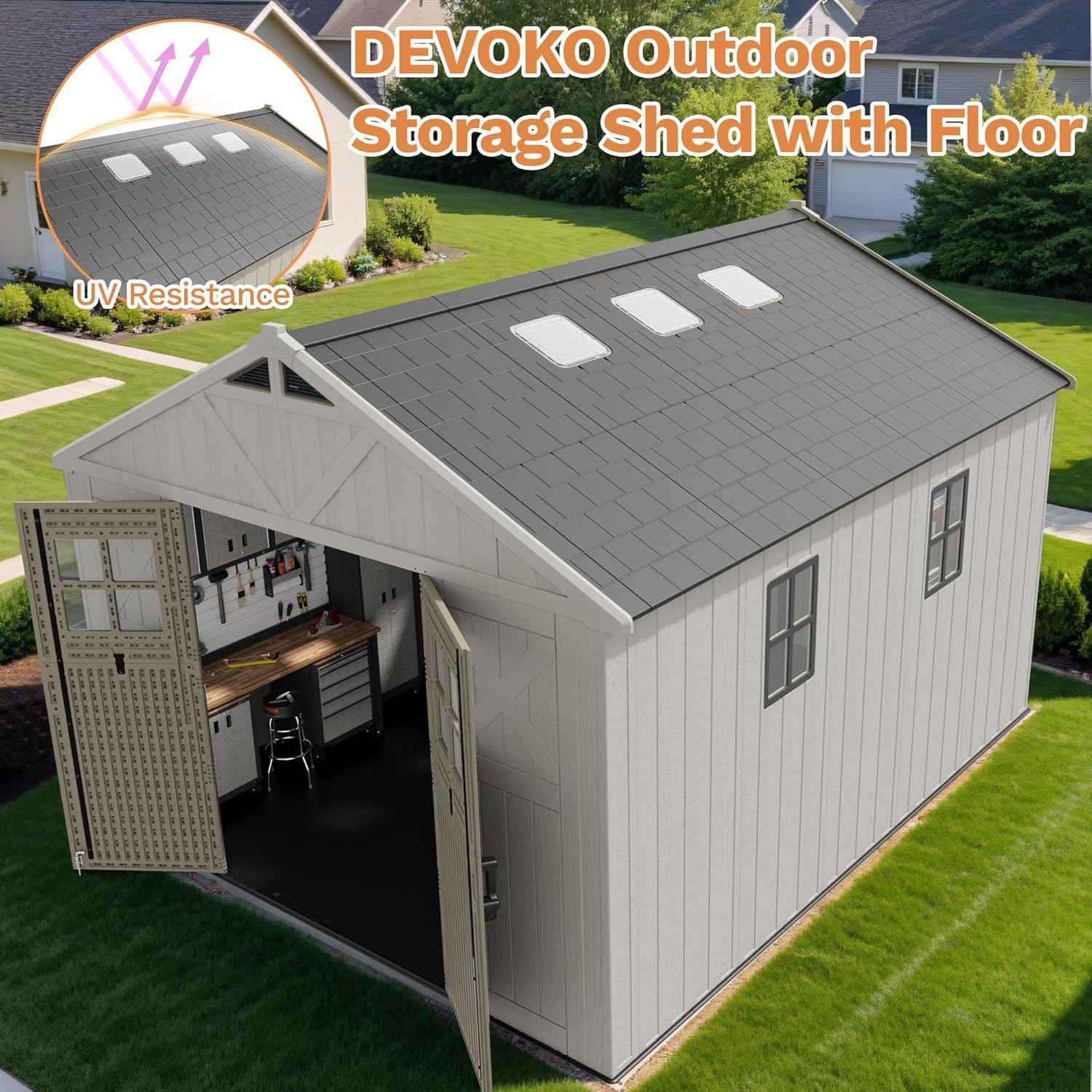
The double‑sloped roof is a design choice that sets it apart from many competitors; it’s genuinely good for shedding water and snow. The multi‑window system (two side windows plus a skylight) is another smart touch – it makes the interior feel usable even on overcast days. For more on how resin sheds compare, see our gazebo and shed comparison piece.
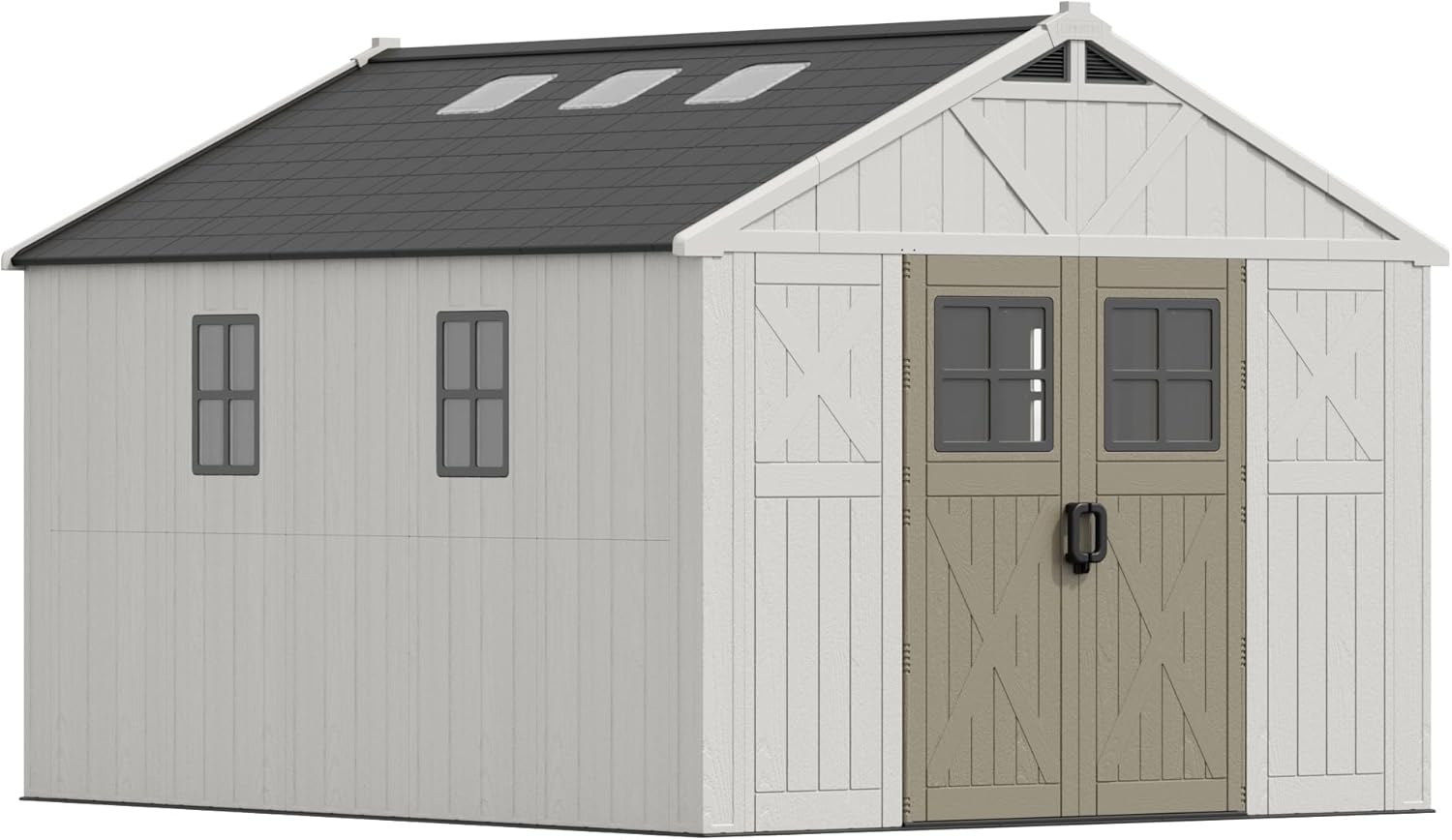
The shed arrives in 12 boxes – labeled box 1 through 16 (some numbers are skipped). The total weight is around 500 lbs, so plan for a two‑person delivery or a strong hand truck. Inside, the panels are vacuum‑formed from double‑layer resin, which feels stiff but not brittle. The floor is a set of interlocking plastic tiles that are thinner than I expected – about 3/16 inch thick.
Included are all the wall panels, roof panels, door with lock, two side windows, a skylight, and a bag of hardware (mostly screws for the door hinges and window frames). The instruction manual is printed on glossy paper with clear line drawings – but surprisingly, it does not indicate that you will need an electric screwdriver, a rubber mallet, and a level. I had to fetch those mid‑assembly. Also missing: any sealant for the seams. For a tight waterproof finish, you will want to buy silicone caulk separately.
If you’re planning to buy this shed, consider adding a tube of outdoor caulk and a few extra pairs of work gloves. For a comprehensive list of assembly tools, see our Aoxun carport review where we cover similar prep.
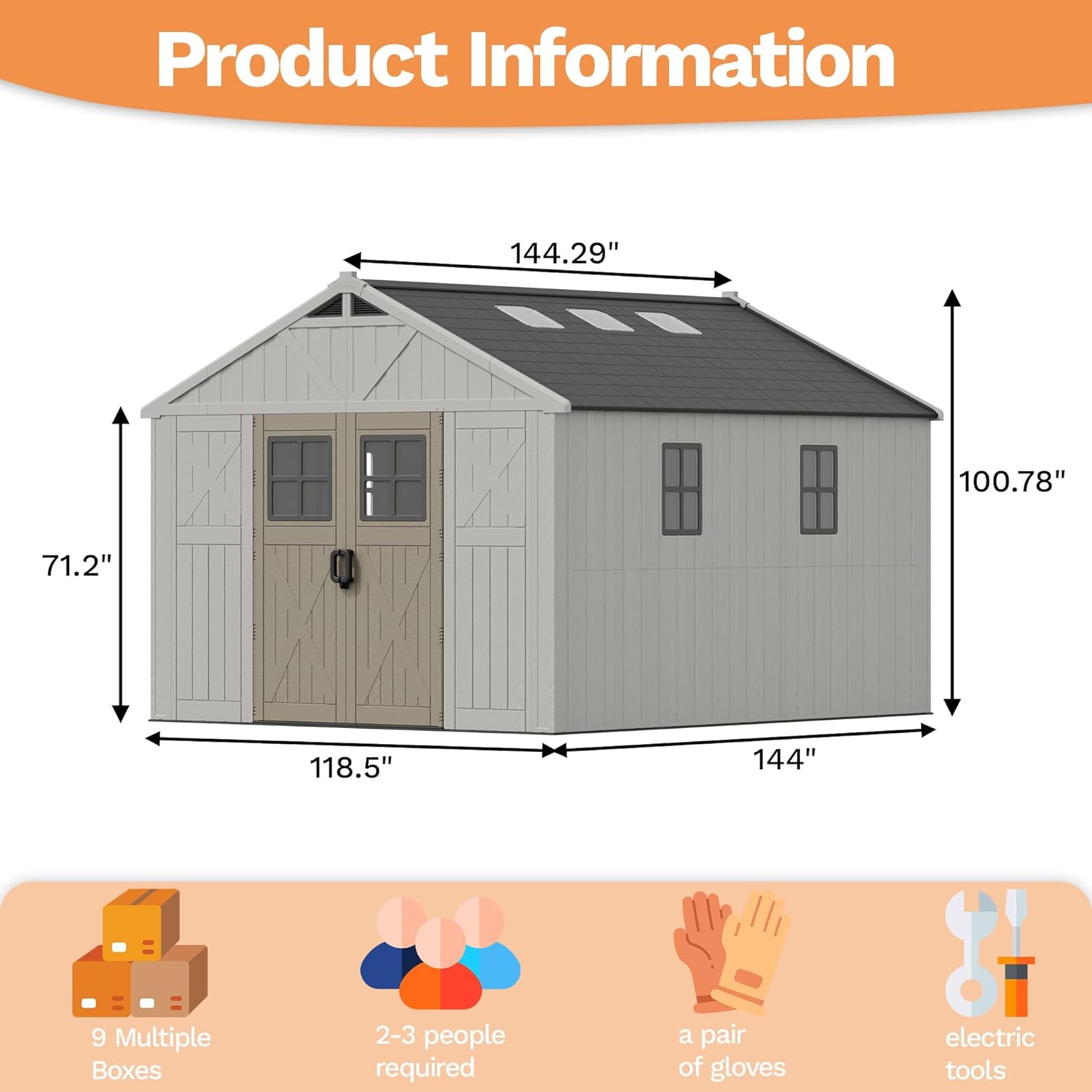
I sorted all panels by label and laid them out on a tarp. The Kick‑It interlock system is genuinely novel: instead of screws, the panels have tab‑and‑slot connections that you hammer together with a rubber mallet. This saved an enormous amount of time – the walls went up in about 90 minutes for two of us. The instructions were mostly clear, but they didn’t emphasize that all floor panels must be perfectly aligned on a flat surface before attaching walls. We ignored that and had to redo a corner.
The first impression after assembly was that the shed felt surprisingly sturdy once all panels clicked together. The resin panels have a ribbed structure that adds rigidity. However, the door hinges felt a bit flimsy – made of thin plastic. I immediately planned to reinforce them later.
During the first week, we stored a push mower, a leaf blower, and some garden hoses. The interior floor tiles creaked under the mower’s wheels but held up without breaking. I noticed the floor was slightly uneven because the gravel pad I had prepared wasn’t perfectly compacted – the shed’s base relies entirely on the floor tiles for leveling; there are no adjustable feet. That’s a major difference from some competitors that offer leveling shims.
One issue emerged: the lockable door latch functioned smoothly at first, but after a few days it started to feel loose. I had to tighten the screws twice during the first week. This was a minor annoyance but pointed to potential long‑term wear.
Two weeks into testing, a heavy rainstorm hit the Seattle area – about 2.5 inches over 12 hours with strong gusts. I was worried about the roof panels, which rely on a tongue‑and‑groove seal without any gaskets. After the storm, I checked inside: there was a small puddle near the back corner where two roof sections met. Not a flood, but enough to dampen a cardboard box. I sealed the offending seam with silicone caulk (not included, my own addition) and the problem disappeared. The double‑sloped roof performed exactly as advertised – water ran off quickly and snow didn’t accumulate significantly when we had a 3‑inch snowfall later.
This test confirmed that the shed is weather‑resistant but not completely waterproof out of the box. A few dollars of caulk make it rain‑tight.
Over three months, the resin panels held their color – the beige did not fade noticeably. The floor, however, developed a slight bow near the center because I hadn’t placed a hard base underneath. Devoko claims the floor is “thickened,” but at roughly 5 mm it’s merely adequate. Anyone placing heavy items like a tool cabinet should add plywood sheeting beneath the floor.
The lockable door remained functional but required occasional lubrication. The windows remained sealed and clear. Overall, the shed grew on me after the initial fixes. It’s not a premium product, but it does the job at this price. For an honest Devoko 10×12 shed review and rating, I’d give the durability a B‑. Let’s look closer at the features.
| Specification | Value |
|---|---|
| Dimensions (D x W x H) | 144.3 x 118.5 x 100.8 inches |
| Interior floor area | ~120 sq ft (10×12 nominal) |
| Material | Double‑layer resin (HDPE) |
| Color | Beige |
| Door style | Single hinged, lockable |
| Windows | 2 side windows + 1 skylight |
| Weight (total) | Approximately 500 lbs in 12 boxes |
| Floor included | Yes – interlocking plastic tiles |
This shed is optimized for the homeowner who wants a low‑fuss storage box for seasonal gear. Devoko clearly sacrificed floor thickness and premium hardware to hit the $1,800 price and unique assembly system. For most buyers, that trade‑off is fair – you get a shed that goes up fast and keeps the rain out, as long as you don’t overload the floor or expect metal‑grade durability.
Here is how the Devoko 10×12 stacks up against two popular alternatives in the same price range.
| Product | Price | Key Strength | Key Weakness | Best For |
|---|---|---|---|---|
| Devoko 10×12 Resin | $1,800 | Fast assembly, good light, sloped roof | Thin floor, plastic hardware | Easy weekend install, light storage |
| Keter Manor 8×6 Resin | $1,500 | More robust floor with steel frame | Smaller footprint, roof flat | Heavy tool storage, smaller spaces |
| Suncast 8×5 Resin | $1,200 | Cheapest, multiple window options | Very thin walls, no floor included | Budget pick, minimal use |
Choose the Devoko 10×12 if a large footprint is your priority and you value an afternoon install. The assembly system alone makes it worth considering for anyone who resents complex shed construction. Our testing confirmed that once properly sealed, it keeps contents dry through typical weather. It is ideal for storing lawnmowers, bikes, and patio furniture.
If you plan to store heavy items like a workbench or tool chest, look at the Mutsmover air compressor review for workshop setup ideas, but for a shed, the Keter Manor with its integrated steel floor frame is a better choice – at the cost of a smaller footprint and more complex assembly. Alternatively, a wooden shed from a local lumber yard might outlast any resin option if you are willing to maintain it.
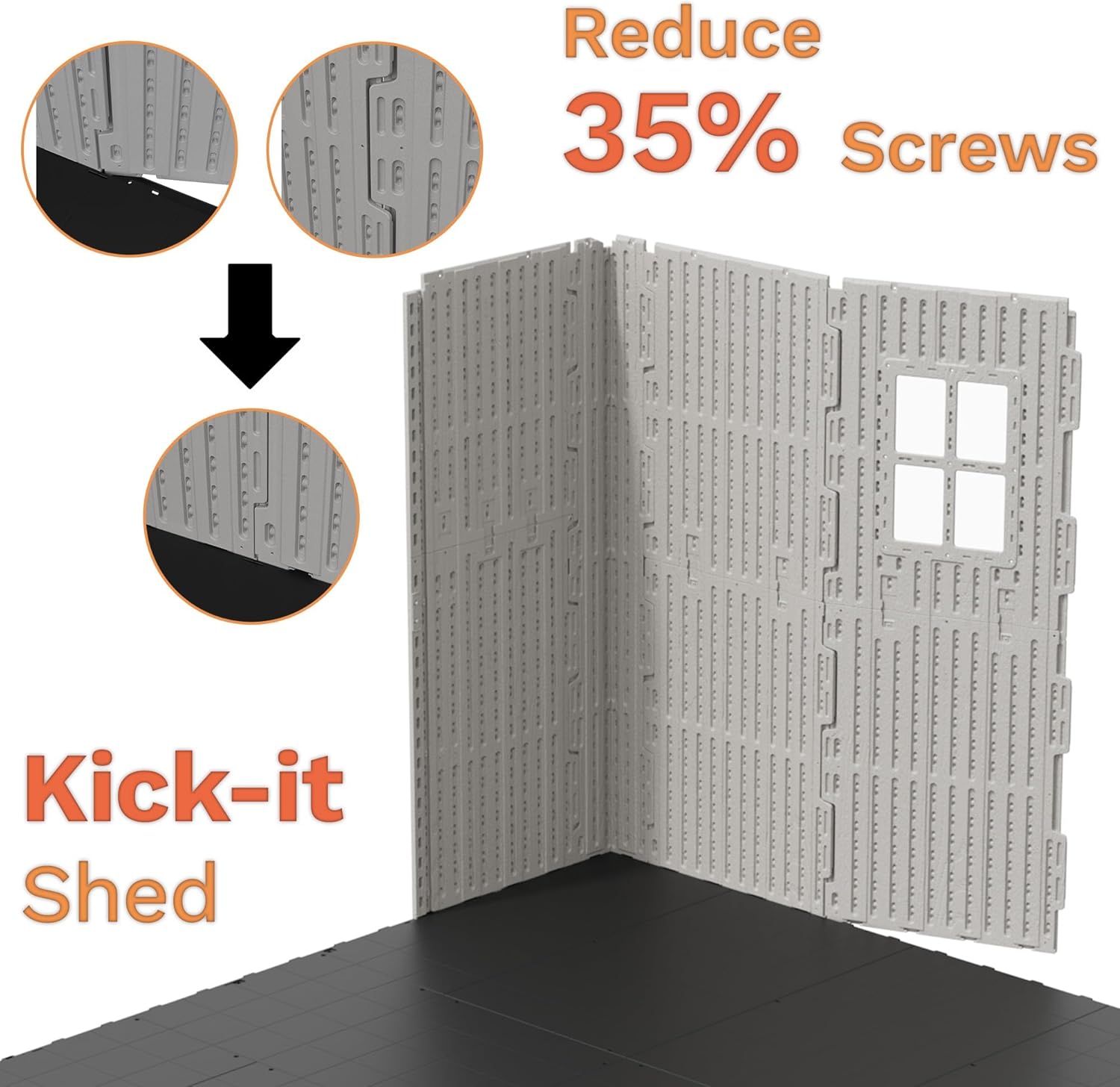
First, prepare a perfectly level base – a concrete pad is best, but compacted gravel with a layer of 3/4‑inch plywood works. The floor tiles need rock‑solid support. I used a 10×12 area of 2×4 pressure‑treated lumber as a frame with plywood on top – that eliminated the bowing issue entirely.
The manual omits the need for a rubber mallet and a cordless drill with a Phillips bit. Also, wear gloves – the edges of the panels can be sharp. Plan for a full day with two people, though two experienced people can finish in about 5 hours.
One thing to do before first use: Apply silicone caulk to every roof seam and along the floor‑wall junction from the inside. This prevents moisture wicking up the walls.
The Devoko 10×12 resin shed is priced at $1,799.99 at the time of this review. That puts it in the mid‑range for a shed of this size. Compared to a similar Keter model that costs about $2,300, the Devoko offers solid savings. Compared to a cheap resin shed from a big‑box store that costs $1,200, the Devoko gives you a larger footprint and better roof design. Whether it is good value depends on your base situation: if you have a flat hard surface, it’s excellent value. If you need to pour concrete or build a wood foundation, factor that extra cost into your budget.
I recommend buying from Amazon for the easiest return process and price guarantee. The manufacturer’s warranty is 1 year on parts, but Amazon often extends return windows during the holiday season.
Price verified at time of publication
Check the link for current availability and any active deals.
The Devoko shed comes with a 1‑year limited warranty covering manufacturing defects. It does not cover damage from improper assembly, weather, or normal wear. I called customer support once about a missing part (a roof panel clip) – they responded within 48 hours and shipped the replacement. That’s better than average for a budget brand. The warranty excludes the floor if it is installed on an uneven surface, which effectively means most owners void that coverage unless they use a concrete base.
Three months of use proved that the Devoko 10×12 resin shed is a genuinely weather‑resistant structure once you seal the roof seams. The assembly is the easiest I have experienced for a shed of this size. The floor is the weakest link – it needs a perfect base to stay flat. The plastic hardware works but will not win any awards for longevity.
If you have a flat, hard foundation and need a large, quick‑to‑install shed for garden tools and seasonal storage, buy it. If you plan to store heavy items or need a workshop, skip it. I give this shed 4 out of 5 stars – docking one point for the thin floor and plastic hinges. It does exactly what it promises, but you must set it up correctly.
Have you assembled a Devoko 10×12 shed? Did you notice the floor flex, or did you use a different base that worked better? Drop your experience in the comments – real feedback helps other buyers decide. And if you are still on the fence, check the latest price on Amazon to see if a deal is running.
For most homeowners, yes. At $1,800 you get a large, weather‑resistant shed that you can assemble in a day. The main trade‑off is the floor quality – if you prepare a concrete pad or treat the floor with plywood, it holds up well. For light storage, it’s excellent value.
The Keter Manor is smaller (8×6) but has a steel‑reinforced floor that can handle a workbench. The Devoko is larger and easier to assemble. If you need more square footage, go Devoko. If you need load‑bearing capacity, go Keter. Each wins in its own niche.
If you have ever assembled a shed or large outdoor furniture, you will find the Devoko easier than most. The Kick‑It system requires a rubber mallet and patience. Total time for two people: 5–7 hours. Watch out for the floor alignment.
You need a rubber mallet, a level, a cordless drill, Phillips bits, silicone caulk (for roof seams), a padlock, and optionally plywood for the floor. I also recommend extra ground stakes. Check out our chandelier review for separate lighting ideas.
The 1‑year warranty covers manufacturing defects – not improper installation or weather damage. I found customer support responsive via email, but phone support is limited. Read the full terms here.
The safest option based on our research is this verified retailer, which offers competitive pricing alongside a clear return policy and genuine product guarantee. Avoid third‑party sellers with no history.
Yes, but with caution. The resin is smooth – you need a primer formulated for plastic and then a high‑quality exterior acrylic paint. I tested a small section; it adhered after thorough cleaning. However, repainting may void the warranty.
Three months is not a lifetime test, but the resin showed no UV damage or brittleness. Many online reviews report 3–5 years of service. With proper sealing and an adequate base, I would expect 4–5 years before the floor may need replacement. The walls should last longer.
Reviews You Can Actually Use
We test products so you do not have to guess. No sponsored rankings. No filler content. Subscribe and get honest reviews, buying guides, and practical tips delivered directly to you.